


What is AI in ecommerce? Why should you leverage AI in Ecommerce in 2026?
AI for ecommerce is the strategic use of artificial intelligence to enhance online retail through personalization, automation, and data-driven insights. Artificial intelligence lets your machines perform complex tasks like reasoning and decision-making to automate your daily operations efficiently.
The global AI-powered ecommerce market is currently valued at $8.65 billion and is projected to reach $22.6 billion by 2032. Retail services alone are expected to surpass $31 billion by 2028, highlighting the industry’s strong commitment to AI-driven innovation.
In ecommerce, core technologies such as Machine Learning and Natural Language Processing power personalized recommendation engines. Meanwhile, Computer Vision, Generative AI, and advanced fraud detection systems help businesses secure transactions while creating high-quality content at scale. These capabilities enable more targeted marketing, higher customer retention, and lower operational costs through seamless automation.
This article from Groove Technology explains what AI for ecommerce business truly is, why businesses should adopt it in 2026, and which AI technologies are essential to master. It also explores key benefits, common challenges, real-world use cases, and provides a step-by-step guide to implementing AI in ecommerce successfully. Read on to begin your journey toward a smarter, more competitive ecommerce business.

1. What is AI for Ecommerce?
AI in ecommerce refers to the application of artificial intelligence technologies across the entire online retail ecosystem, from operations and marketing to customer experience. Instead of relying solely on predefined rules, AI-powered ecommerce systems can learn from data, analyze customer behavior, and make real-time decisions to continuously optimize performance.
In practice, AI enables ecommerce businesses to gain deeper insights into customers by processing massive volumes of data, such as purchase history, browsing behavior, engagement time, and even search intent. Based on these insights, AI systems can personalize shopping experiences, recommend relevant products, optimize pricing strategies, manage inventory more efficiently, and improve conversion rates without constant manual intervention.
Beyond the customer-facing layer, AI customer service for ecommerce also plays a critical role in backend operations. Machine learning models can forecast demand, detect payment fraud, optimize supply chains, and support customer service through intelligent chatbots. As a result, businesses can reduce operational costs while responding more quickly and accurately to market changes.

2. Why should you leverage AI for ecommerce in 2026?
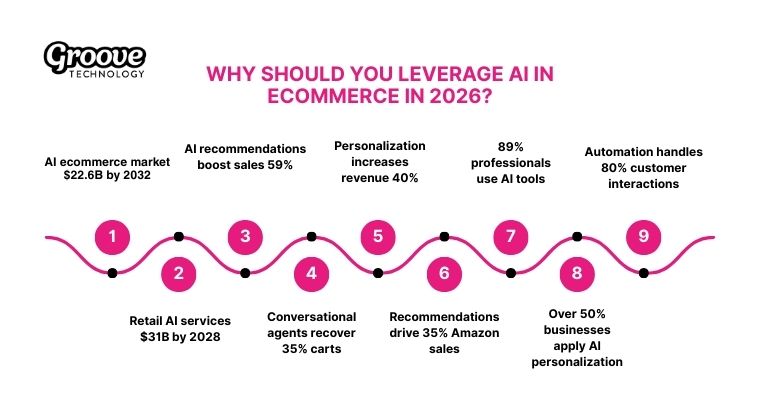
If you need convincing, market data highlights 9 statistics regarding why you must choose the AI path:
- The global AI ecommerce market valuation will reach $22.6 billion by 2032.
- Retail AI services forecast a surge to over $31 billion by 2028.
- AI-driven recommendations boost your ecommerce sales figures by up to 59%.
- Conversational agents recover 35% of abandoned carts to improve your conversion rates.
- Personalization increases retail revenue by 40% and significantly lifts conversion rates.
- Recommendation engines contribute 35% of annual sales for giants like Amazon.
- Ecommerce professionals (89%) use or test AI tools in their daily operations.
- Over half of businesses employ AI to deliver smoother, personalized shopping experiences.
- Automation handles 80% of customer interactions to improve efficiency and reduce costs.
3. Types of AI technologies used in ecommerce
The AI automation for ecommerce ecosystem in ecommerce can be organized into five core technology groups, each serving a distinct role while working closely together, include:
- Machine Learning and Predictive AI
- Natural Language Processing
- Recommendation and Personalization Engines
- Computer Vision and Generative Models
- Fraud Detection and Optimization Tools.
Machine Learning and Predictive AI
Machine learning allows systems to analyze customer behavior and purchase history in order to forecast future demand. This enables businesses to develop accurate demand forecasting, dynamic pricing strategies, and more efficient inventory management, rather than reacting slowly to market fluctuations.
In addition, predictive models segment customers based on behavior and value, supporting more targeted marketing campaigns. Estimating customer lifetime value (CLV) also helps improve retention, shifting ecommerce operations from reactive execution to proactive decision-making.
Natural Language Processing
Natural Language Processing is the foundation behind chatbots and virtual assistants in ecommerce. This technology enables systems to understand and process human language (both text and voice) in a way that feels natural and intuitive.
With NLP, chatbots can assist customers throughout the entire shopping journey, from product discovery and recommendations to checkout support and issue resolution. As a result, businesses improve customer service efficiency while delivering a seamless and consistent conversational experience across all touchpoints.
Recommendation and Personalization Engines
Recommendation and Personalization Engines are a core component of AI for ecommerce websites, leveraging browsing data and purchase history to suggest relevant products to each user.. Using techniques such as collaborative filtering, ecommerce platforms can deliver recommendations that closely match user intent, thereby increasing average order value and conversion rates.
Beyond product suggestions, AI also personalizes search results, content prioritization, and even website layouts. This creates a shopping experience that feels tailored to each visitor, reducing bounce rates and strengthening customer engagement.
Computer Vision and Generative Models
Computer Vision enables systems to understand and interpret visual information, powering features such as visual search and virtual try-on. Shoppers can upload images and instantly find similar products, significantly shortening the decision-making process.
At the same time, Generative AI supports the creation of product images, descriptions, marketing content, and other digital assets at scale. This helps businesses expand their catalogs faster and enhances how customers visualize and interact with products before making a purchase.
Fraud Detection and Optimization Tools
AI plays a critical role in identifying abnormal transaction patterns, enabling real-time fraud detection that protects ecommerce revenue. Machine learning models continuously learn from new data to improve accuracy and reduce false positives.
Beyond security, AI also supports operational optimization, including delivery route planning, logistics cost reduction, and faster fulfillment. Automated, behavior-driven marketing tools such as triggered emails and notifications, further increase engagement without adding operational complexity. Together, these capabilities help businesses stay secure while simplifying the challenges of running a large-scale ecommerce operation.
4. Benefits of using AI in ecommerce
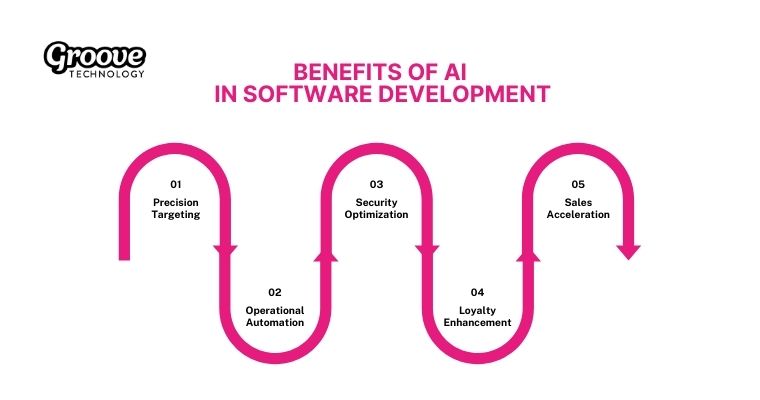
Artificial intelligence integration through AI solutions for ecommerce provides five powerful advantages for your digital commerce strategy and these benefits help you stay competitive in the modern market because automation improves your overall efficiency.
- Precision Targeting: Machine learning algorithms analyze how your shoppers browse your website because these systems deliver highly relevant product ads that match their specific needs. This data-driven strategy converts casual visitors into loyal buyers, and these personalized campaigns increase both your brand visibility and your conversion rates significantly.
- Loyalty Enhancement: AI-driven personalization creates custom product suggestions and special discount offers so that your online store builds a stronger connection with your existing client base. Online retailers who utilize these customized communication strategies see their customer retention rates improve by up to 30% because shoppers enjoy a more tailored experience.
- Operational Automation: Intelligent automation tools handle repetitive tasks like updating inventory counts and routing customer support chats so that your human employees can focus on high-level business strategy. Your team gains valuable time to improve your brand while the software manages routine shipping updates and product restocking because technology reduces your manual workload.
- Sales Acceleration: Automated tracking systems identify high-value shoppers based on their cart activity and browsing history so that your store shortens its average sales cycle. Companies that leverage these specialized ecommerce tools reduce their operational costs by up to 60% while these automated processes close transactions much faster.
- Security Optimization: Real-time detection software identifies fraudulent credit card transactions and suspicious accounts instantly so that your business maintains a secure shopping environment for every user. Advanced analytics reveal critical trends and these robust security measures help you lower your overall customer acquisition costs by nearly 50%.
- Financial barriers: High upfront costs for cloud infrastructure, specialized AI software, and skilled engineers can be overwhelming. For small ecommerce businesses, recurring subscription fees and model maintenance often put pressure on profit margins.
- Data fragmentation: Disconnected data across websites, analytics platforms, and customer support systems prevents AI from learning accurately. Strong data governance is essential to ensure consistent and reliable behavioral and transaction data across all channels.
- System compatibility: Legacy warehouse and back-office systems frequently conflict with modern AI requirements, leading to costly custom integrations. Poor synchronization between new AI tools and existing inventory databases can also disrupt daily operations.
- Talent scarcity: Machine learning and retail data experts remain in short supply, while recruitment and training costs continue to rise. As a result, companies must invest time and resources to upskill internal teams.
- Algorithmic bias: Historical data may contain hidden biases that AI models unintentionally reinforce through pricing or product recommendations. Rigorous testing and monitoring are critical to avoid unfair customer experiences and brand reputation risks.
- Workflow resistance: Employee concerns about job security often slow AI adoption. Clear communication and hands-on training help staff adapt and collaborate more effectively with intelligent systems.
6. AI use cases in ecommerce
Custom AI for ecommerce is no longer experimental. In practice, businesses can deploy the following nine core use cases to quickly modernize their storefronts, streamline operations, and strengthen competitive advantage.
- Intelligent product discovery
AI analyzes purchase history, browsing behavior, and search context to predict future customer needs. Based on these insights, relevant products are surfaced in real time, simplifying the shopping journey and significantly improving conversion rates without increasing ad spend.
- Dynamic pricing
AI algorithms continuously monitor supply, demand, customer behavior, and market conditions to determine optimal pricing at any given moment. Prices are automatically adjusted to maximize revenue while protecting profit margins, eliminating reliance on static rules or manual updates.
- Automated customer support
AI-powered chatbots and virtual assistants operate 24/7 to handle common inquiries such as order status, product details, and return policies. Customers receive instant responses, while human agents can focus on complex cases that require empathy and nuanced judgment.
- Behavioral segmentation
AI dynamically groups customers based on real-time interactions and evolving behavior rather than static demographics. This enables highly targeted marketing campaigns with personalized messaging that adapts as customer preferences change.
- Intelligent fulfillment
Predictive analytics optimize shipping routes, anticipate delivery delays, and improve inventory allocation across warehouses. As a result, businesses reduce logistics costs, shorten delivery times, and enhance post-purchase customer satisfaction.
- Inventory forecasting
By combining historical sales data, market trends, and seasonality signals, AI forecasts future demand with high accuracy. This helps prevent stockouts and overstocking, maintaining healthy inventory levels and improving profitability.
- Autonomous operations
Agentic AI systems can make decisions and execute actions independently, such as reordering inventory when stock levels drop. These systems continuously learn from outcomes to optimize store performance in real time, creating a more adaptive retail environment.
- Adaptive checkout
AI-driven checkout flows adjust dynamically based on user behavior to reduce friction during purchase. The system may skip unnecessary steps, recommend preferred payment methods, or automatically apply loyalty rewards, significantly lowering cart abandonment rates.
- Generative search visibility
As search behavior shifts toward AI-generated answers, ecommerce strategies increasingly focus on structured data, conversational content, and contextual product information. AI helps products appear directly within generative responses, ensuring continued visibility beyond traditional search results.
7. How to implement artificial intelligence into ecommerce effectively?
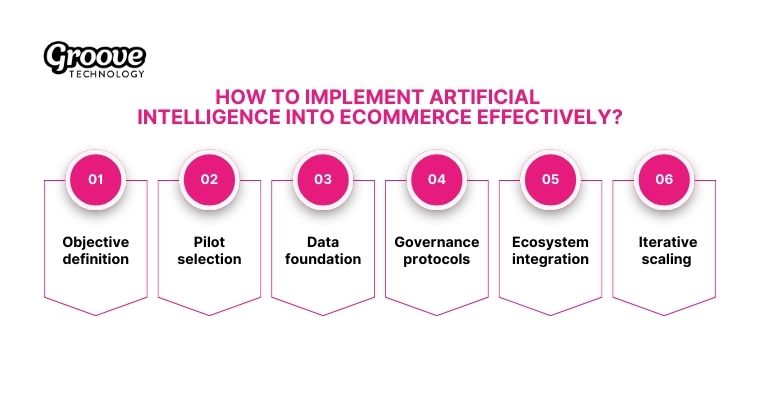
You can follow these 6 strategic steps to integrate artificial intelligence into your ecommerce operations successfully.
- Step 1 – Objective definition: Your team identifies specific operational priorities like faster content creation or sharper personalization before selecting any tools. Clear goals prevent wasted investment and keep technology aligned with measurable outcomes.
- Step 2 – Pilot selection: Your managers focus on high-impact areas like product descriptions or recommendation models to demonstrate immediate value. Quick wins build confidence within your team and justify further technological expansion.
- Step 3 – Data foundation: A reliable Product Information Management system acts as the central source of truth for all AI training. Accurate product specs and metadata prevent errors from multiplying across different channels.
- Step 4 – Governance protocols: Content teams establish approval workflows to maintain brand voice and verify regulatory compliance for generated assets. Human review prevents costly mistakes in technical categories or regulated industries.
- Step 5 – Ecosystem integration: Your developers connect AI tools directly with existing platforms like ERP and CRM to avoid information silos. Smooth data flow maximizes the effectiveness of your entire technology ecosystem.
- Step 6 – Iterative scaling: Your business launches initiatives in a single category to refine processes before expanding to other markets. Performance metrics validate success before the program expands to other product lines.
8. Top 5 AI tools for Ecommerce in 2026
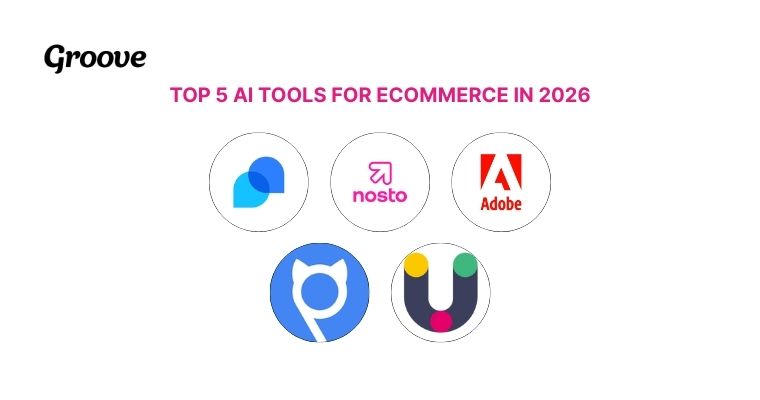
You can optimize your operations immediately by integrating these 5 leading artificial intelligence platforms into your current technology stack.
- Lyro AI Chatbot: This conversational agent uses natural language processing to answer customer inquiries instantly around the clock. The system learns from every interaction to handle complex requests while human agents remain available for specific interventions.
- Nosto: Machine learning algorithms analyze behavioral data to generate real-time product recommendations across your digital channels. This platform balances automated personalization with manual control to ensure high relevance without impacting your site speed performance.
- Adobe Sensei: Intelligent services integrate with Adobe Commerce to automate catalog management and personalize content delivery based on deep analysis. Retailers use these predictive search capabilities and data insights to make smarter decisions that drive revenue.
- Plerdy: The UX assistant converts raw user interaction metrics into actionable advice for conversion rate optimization. Teams receive targeted reports on specific design elements to improve website performance without complex integration processes.
- Navigation AI by Uxify: Smart analysis predicts user behavior to preload pages before a click actually occurs for near-instant transitions. This lightweight tool works on any device to boost engagement metrics and core web vitals significantly.
This guide detailed the technologies and strategic steps required to integrate AI for ecommerce into your business operations effectively. You gained practical insights on overcoming adoption hurdles and selecting tools that automate tasks while increasing revenue.
Groove Technology connects you with skilled professionals who build custom AI solutions, ranging from machine learning agents to advanced data analytics platforms. Our teams deliver transparency and technical excellence to help your business achieve sustainable growth through innovation.

